Moving into a new home often comes with a long checklist, and window treatments are usually one of the last items to be finalised. At first, choosing curtains or blinds for your HDB may feel rather straightforward. However, once you begin living in the space, small details such as the glare on your TV, heat from the afternoon sun, or lack of privacy quickly become more noticeable.
In this guide, we’ll explore both the practical and design aspects of choosing curtains and blinds for your HDB, helping you make decisions based on how your home actually functions.
Key Takeaways
- Think about sunlight, privacy, and airflow first. The right curtains and blinds for your HDB should solve these everyday needs before focusing on aesthetics.
- Different spaces need different solutions. Use layered curtains in living rooms and bedrooms, and consider blinds for more practical areas like kitchens or study rooms.
- How you install your curtains affects how the room feels. Higher mounting and wider coverage can make windows look bigger and ceilings feel taller.
- Opt for fabrics and finishes that can handle heat and humidity. Low-maintenance curtains and durable blinds make daily upkeep easier.
- Your HDB window treatments should complement your overall interior, from colour and texture to how they sit when open.
Practical Considerations For HDB Curtains and Blinds
Light Control, Privacy, and Ventilation Needs
Before looking at styles or materials, it helps to start with the basics. Factors like sunlight exposure, privacy between neighbouring units, and airflow all affect how comfortable your space feels.
1. Manage Sunlight and Indoor Comfort
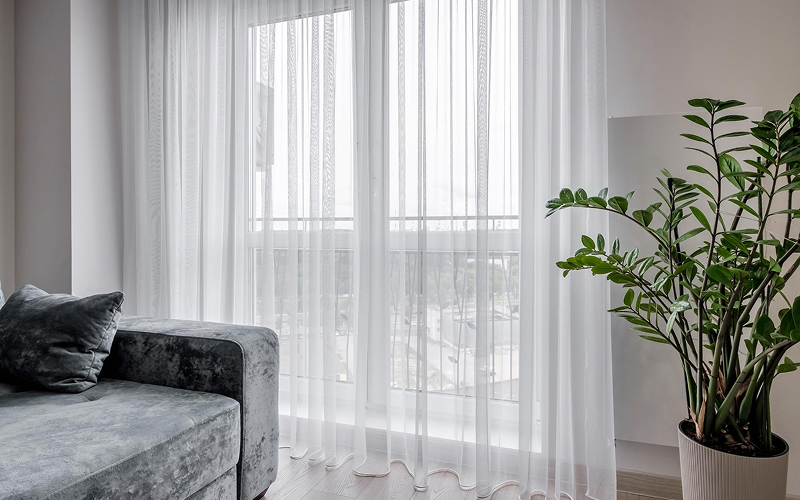
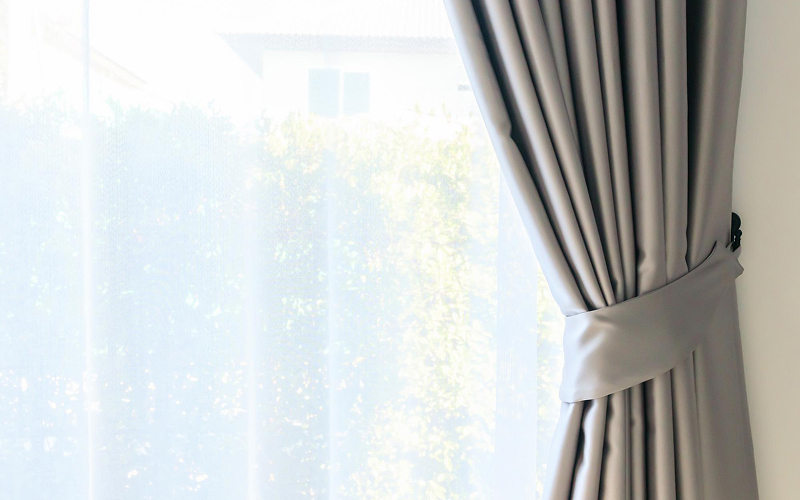
The amount of sunlight your apartment gets can directly influence the window treatments you choose. For west-facing units that receive strong afternoon sunlight, opt for day and night curtains, which are made of sheer curtains paired with a blackout or dim-out layer. Sheer fabrics help diffuse harsh light while keeping the space bright, while the heavier layer can be drawn when the heat and glare become too intense. The key is to match your curtains or blinds to how much light your HDB apartment receives, so you can stay comfortable throughout the day without relying too much on artificial lighting or cooling.
2. Balance Privacy Without Blocking Light
In some HDB estates, the neighbouring blocks can be close enough that privacy becomes a concern. If full privacy is your priority, opt for HDB curtains made of heavier or more opaque fabrics that can block visibility when drawn. This is especially useful for bedrooms or living rooms that face directly into another block.
For bedrooms, consider combi blinds for greater flexibility, as they let you easily switch between sheer and opaque layers. You can keep the space bright while reducing visibility during the day, then switch to full coverage at night.
3. Maintain Airflow and Usability
Airflow is an important factor when choosing HDB curtains and blinds. Look for materials that do not trap heat or block ventilation, such as lightweight polyester blends, linen-look fabrics, or other breathable textiles that allow air to pass through more easily, even when your curtains are drawn.
If you are considering blinds for your HDB, go for designs that allow adjustability, such as Venetian blinds or louvred styles. These can be tilted open to let air in while still maintaining privacy.
Space Planning and Installation Constraints
You’ll also need to consider how your window treatments will fit into your space. In HDB homes, where layouts can be compact, well-fitted curtains and blinds can make all the difference.
1. Work Within a Limited Space
If you do not have much space to work with, opt for curtains that are neatly tailored and sit close to the window. Lighter fabrics can also prevent the space from feeling too heavy or enclosed, especially in smaller bedrooms. For a more streamlined option, consider roller blinds. These sit close to the window and take up minimal room when not in use, which is useful if you have furniture placed nearby or limited walkway space.
2. Choose the Right Mounting Approach
How you install your curtains or blinds can also affect how spacious a room feels. For example, ceiling-mounted curtains draw the eye upward, making ceilings appear higher and the space feel more open. This works especially well in HDB flats and condominiums with smaller floor space.
However, if there are structural limitations or if ceiling installation is not possible, wall-mounted options may be more practical. In these cases, placing the track slightly above the window frame can still help create a more balanced look.
3. Account for Existing Features
HDB windows often come with grilles, ledges, or nearby air-conditioning units, and these can affect how your window treatments function. When planning for your HDB curtains, make sure there is enough clearance for the fabric to move smoothly without getting caught on these features.
For blinds, accurate sizing is important so they do not hit against the grilles or handles of your HDB windows when in use. Take these details into account early to avoid frustration later, such as curtains that cannot be fully drawn or blinds that do not close properly.
4. Get Measurements and Installation Right
A good fit starts with accurate measurements, but it is also about how everything comes together during installation. For HDB curtains, you need to consider track placement, how much fabric fullness you want, and how far the curtains should extend beyond the window frame.
Even small errors can lead to uneven drapes, gaps that let in light, or blinds that sit awkwardly. Taking the time to get these details right results in a cleaner, more polished finish. It also helps prevent issues later on, such as misalignment, difficulty in operation, or wear on the track system.
Materials, Durability, and Maintenance in Singapore’s Climate
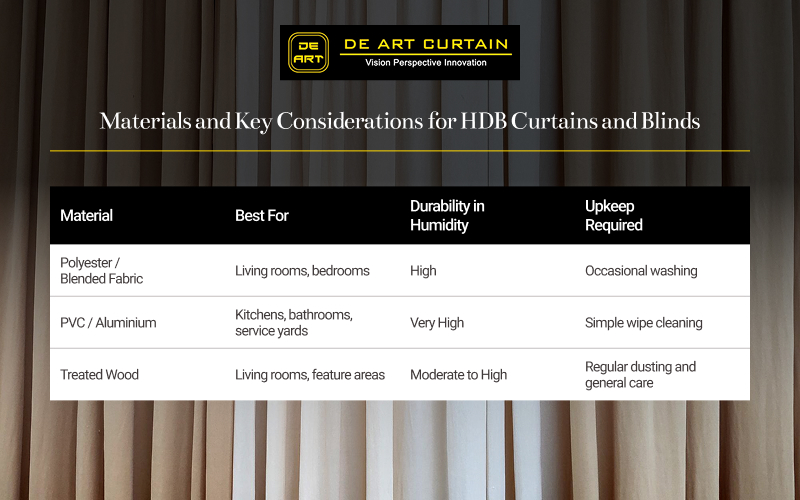
Singapore’s climate can be demanding, so selecting the right materials for your HDB curtains and blinds helps ensure they hold up well over time.
1. Choose Materials Suited for Tropical Conditions
Singapore’s heat and humidity can wear down window treatments faster than expected, so material choice matters. Go for fabrics that can handle moisture and regular sun exposure without fading or developing mould. Polyester or blended fabrics are usually more practical, as they hold their shape better and are less prone to damp-related issues compared to pure cotton or linen.
For blinds, materials like PVC and aluminium are more resistant to humidity and easier to maintain, which makes them suitable for areas like kitchens or rooms with more airflow. If you prefer a more natural look, treated wooden blinds can work as well, but they need to be properly sealed to prevent warping over time.
2. Consider Ease of Maintenance
Maintenance is something you will deal with regularly, so it is worth thinking about from the start. Curtains made of polyester or blended fabrics are less likely to trap dust and can often be machine-washed, while materials like velvet or thick linen tend to hold onto dust and require more frequent cleaning. Blinds are generally easier to manage, as they can be wiped down quickly during routine cleaning, making them ideal for areas like kitchens or service yards.
Designing Your HDB Windows: Style, Aesthetics, and Cohesion
Once you have sorted out the practical aspects, the next step is to think about how your window treatments come together visually. This is where your choices start shaping the overall feel of your home.
Choosing the Right Type of Curtains for Your HDB Aesthetic
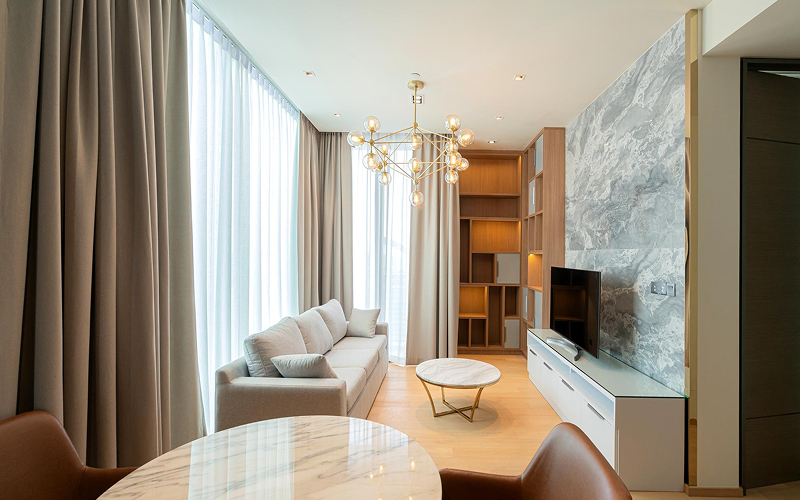
1. Choose Colours That Tie the Room Together
Your curtains should feel like part of your HDB interior design, not an afterthought. Look at your existing elements, such as wall colour, flooring, and furniture finishes. If your space uses lighter tones, choosing warm neutrals or soft textures can add depth without making the room feel flat.
If your home already has stronger colours or darker finishes, your curtains can help balance things out. For example, softer shades can tone down contrast, while slightly richer tones can anchor the space. Staying within the same colour family but varying the shade or texture helps everything feel more cohesive.
2. Create Texture and Visual Interest
The texture and material of your curtains can also influence the aesthetics of your HDB apartment. Smooth fabrics tend to give a cleaner, more modern look, while textured weaves or layered curtains can make a room feel softer and more relaxed.
For example, a linen-look fabric or lightly woven curtain can introduce subtle texture that works well in minimalist or Japandi-style homes. If your space feels too flat, adding a slightly thicker fabric with a visible weave or a soft matte finish can help break that uniform look.
3. Consider How Curtains Look When Open
Curtains are not always drawn, so it helps to think about how they look when opened. In smaller HDB spaces, bulky curtains can bunch up and cover part of the window, which reduces natural light and makes the room feel tighter.
Choosing fabrics that stack neatly or planning enough side space allows the curtains to sit cleanly when opened. This keeps your windows fully visible and maintains the intended look of the room, especially during the day when natural light plays a bigger role in the overall atmosphere.
4. Keep the Overall Look Clean and Intentional
Aesthetic choices are not just about fabrics and colours. Details like curtain tracks, folds, and operation also affect how polished the space feels. S-fold curtains also tend to look more streamlined and consistent, which works well in homes with a modern luxe interior design.
Motorisation can also contribute to a cleaner look by removing visible cords and making the setup feel more seamless. While it is often seen as a functional upgrade, it also helps maintain a more refined and uncluttered appearance, especially in minimalist interiors.
Blind Styles for a Clean and Contemporary Look
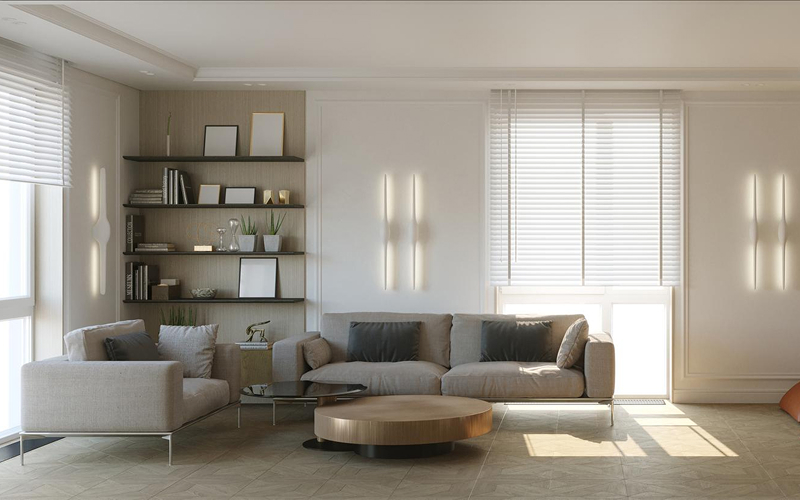
1. Roller Blinds for a Minimal, Uncluttered Look
Roller blinds are ideal if you prefer a clean and understated aesthetic. They sit close to the window and visually “disappear” when rolled up, which helps keep the space looking neat and open. Neutral shades like white, beige, or soft grey blend easily into the background, while slightly textured finishes can add subtle depth. Plus, you can also pair them with curtains to soften the overall look if the space feels too plain.
2. Venetian or Wooden Blinds to Add Contrast
If your space feels too flat or lacks variation, adding blinds with more structure can help. Venetian blinds introduce horizontal lines that break up large surfaces and add a sense of layering, which works well in clean, modern interiors. Wooden blinds, in particular, bring in a warmer, more natural look. Finishes like light oak or walnut can complement neutral palettes and add contrast against plain walls.
3. Vertical Blinds for a Sleek, Streamlined Finish
For sliding doors or full-height windows, vertical blinds are often more practical than multiple curtain panels. They can be drawn to one side, making it easier to move in and out without obstruction, which is useful for balconies or service yards.
Visually, vertical blinds create clean, elongated lines that can make the space feel taller. Choosing neutral tones helps them blend into the background, while slightly textured finishes can prevent them from looking too flat.
Curtains, Blinds, or a Combination: What Works Best for Your HDB?
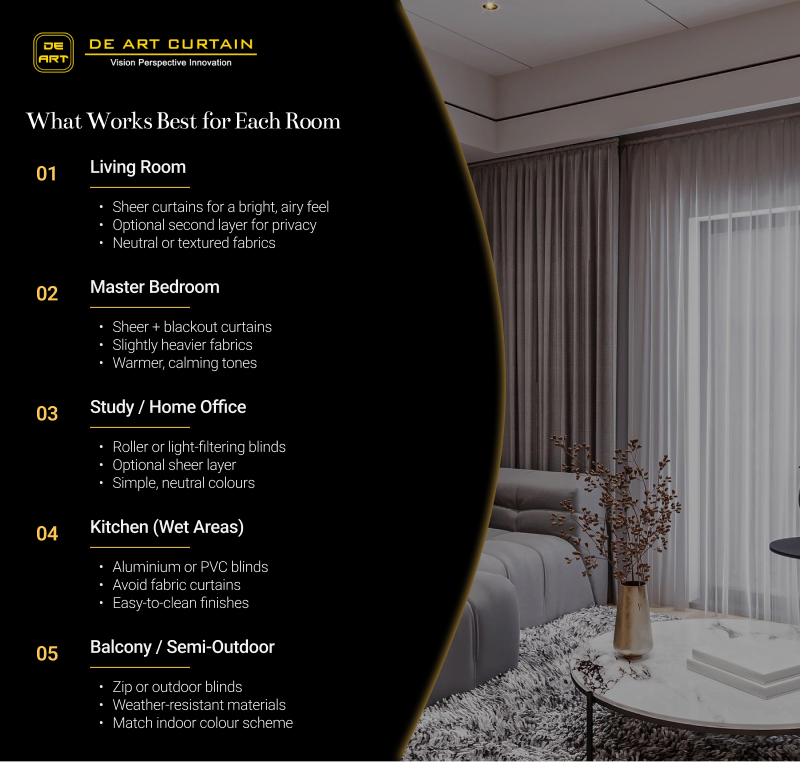
Instead of applying the same window treatments throughout your home, it often works better to tailor your approach so each room feels intentional and suited to its purpose.
Living Room
The living room is where your window treatments contribute most to the overall look of the home. You want something that keeps the space bright while still feeling complete and well-styled.
Recommended setup:
- Sheer curtains for a soft, airy base
- Optional second layer (dim-out or blackout) for added depth and flexibility
- Neutral or textured fabrics to complement your main colour palette
Master Bedroom
In the bedroom, the goal is to create a space that feels calm, private, and suited for rest. The right combination helps you shift easily between day and night settings.
Recommended setup:
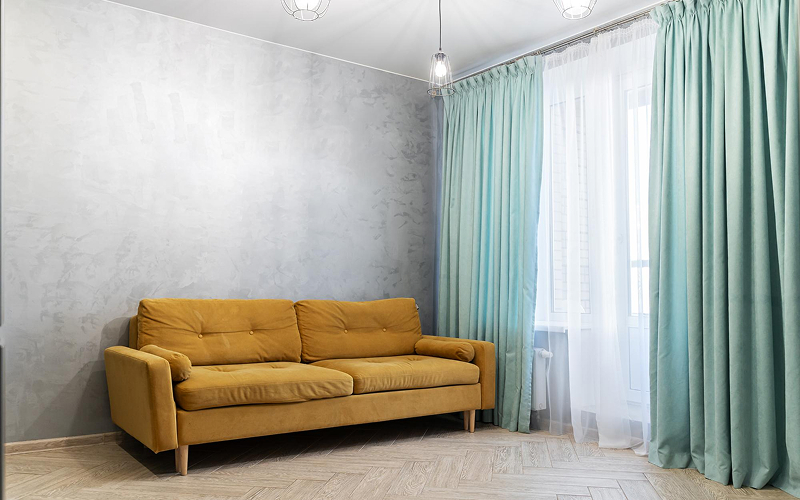
- Layered curtains with sheer and blackout combination
- Slightly heavier fabrics for a more grounded, cosy feel
- Darker or warmer tones to create a more restful environment
Study Room or Home Office
Workspaces benefit from a cleaner, more minimal setup that supports focus without adding visual clutter.
Recommended setup:
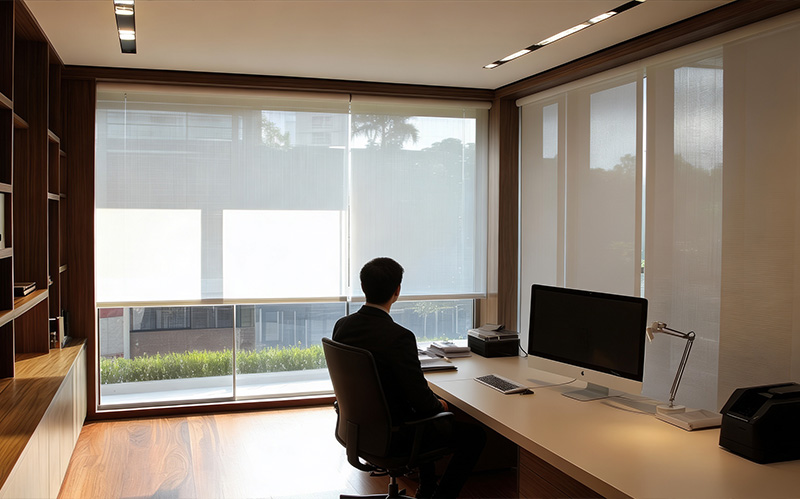
- Roller blinds or light-filtering blinds for glare control
- Optional sheer drapes to soften the space
- Simple, neutral colours to keep the environment distraction-free
Kitchen (Wet Areas)
Kitchens require a more practical approach, so the design should stay simple and easy to maintain.
Recommended setup:
- Aluminium or PVC blinds for durability
- Minimal or no curtains in wet areas
- Finishes that match nearby spaces for visual consistency
Balcony or Semi-Outdoor Areas
Balconies sit between indoor and outdoor living, so the setup should feel connected while remaining functional.
Recommended setup:
- Zip blinds or outdoor blinds for sun and weather protection
- Consistent colours or materials to tie both the interior and exterior together
Frequently Asked Questions
1. Are motorised curtains and blinds worth it?
Automated window shades are most useful in homes with larger windows, higher ceilings, or areas that are harder to reach, which is often the case in condos and landed homes. That said, these curtains can still be a practical upgrade in HDB flats, especially in bedrooms and living rooms.
2. How do I measure my HDB windows for curtains?
Start by measuring the width and height of your window using a measuring tape. For HDB curtains, measure the full width of the wall or window area, then add extra on both sides (usually 15–30 cm each side) so the curtains can be pulled fully away from the window. For height, measure from where you intend to install the track, typically closer to the ceiling, down to your desired endpoint.
3. Can I install curtains or blinds myself, or should I hire a professional?
Basic installations may seem straightforward, but achieving a clean, well-aligned finish can be challenging. Factors like uneven walls, window grilles, and correct mounting positions can affect the final result. We recommend choosing professional installation to avoid these issues, ensuring smoother operation and a more polished overall look.
Conclusion
Choosing the right curtains and blinds for your HDB is not just about style. It is about how your home feels throughout the day, how comfortable your spaces are, and how easily everything fits into your routine.
At De Art Studio, we are here to help you find window solutions that suit both your home and your daily routine. Whether you live in an HDB, condominium, or landed home, our team works closely with you to recommend the right fabrics, styles, and finishes that fit your space. Contact us today to learn more.